Cloud 3.0 shifts enterprises from digital enablement to AI-native operating models.
For more than a decade, cloud transformation focused on scalability, cost efficiency, and digital modernization. Enterprises migrated workloads, consolidated infrastructure, and improved agility. That phase created digital enablement.
Cloud 3.0 moves beyond enablement. It embeds intelligence directly into enterprise operations.
In this phase, cloud is no longer merely infrastructure. It becomes the execution layer for AI models, real-time analytics, automation engines, and Digital Twin environments. Decisions are increasingly informed, and in some cases executed, by AI systems operating within cloud-native architectures.
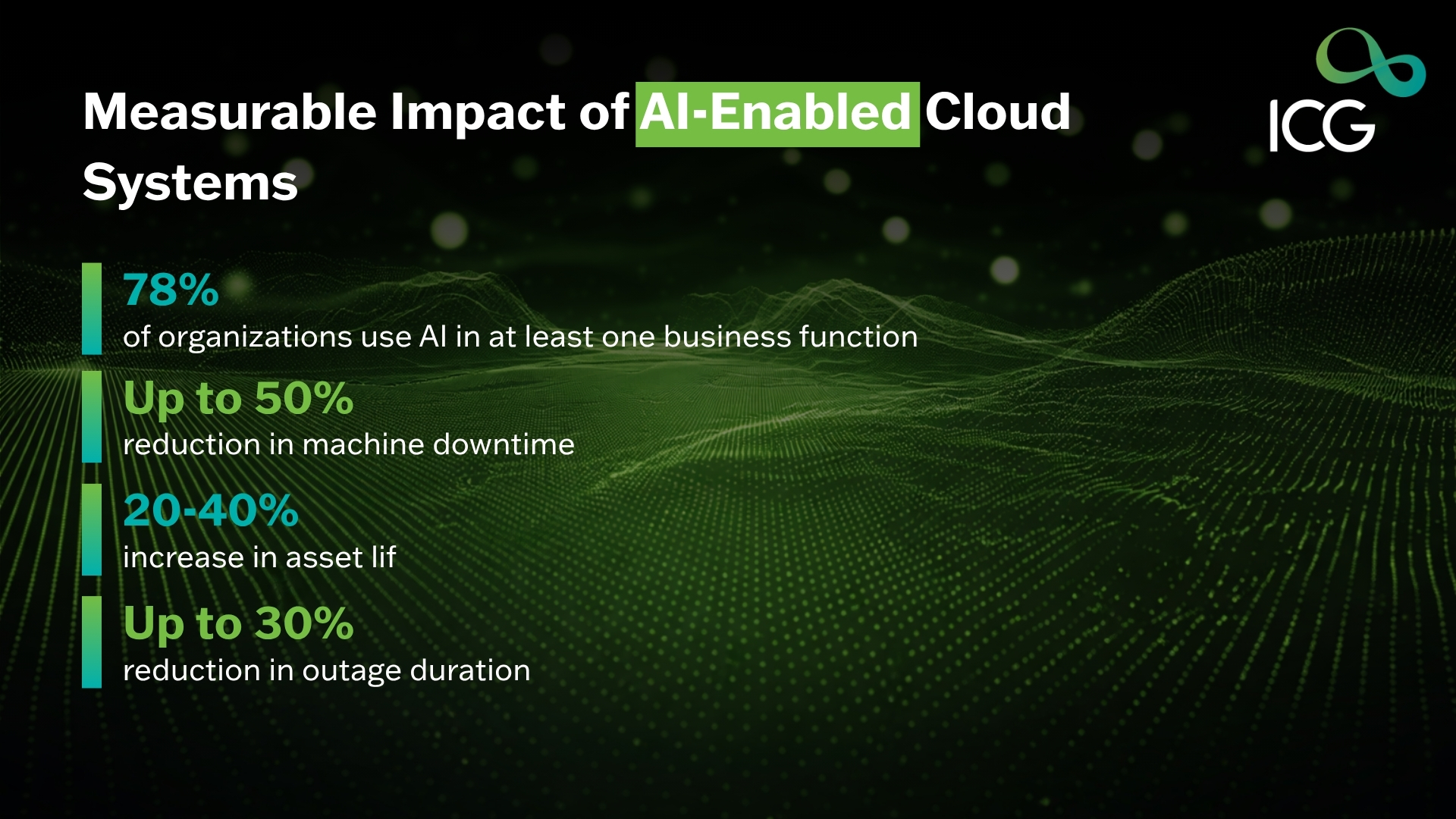
Industry research underscores the scale of this shift. A 2023 global survey found that 78% of organizations report using AI in at least one business function, up from 55% the previous year, reflecting how rapidly AI capabilities are being integrated into enterprise systems. As AI adoption accelerates, cloud platforms provide the scalable foundation required to operationalize intelligence across the organization.
Cloud 3.0 therefore signals a structural redesign of the enterprise operating model itself.
The Operating Model Evolution
Centralized IT → Distributed cloud ecosystems
Traditional enterprises relied on centralized IT departments to provision infrastructure and control systems. Innovation cycles were constrained by internal capacity and approval processes.
Cloud-native ecosystems decentralize capability while maintaining governance. Hybrid architectures, APIs, edge environments, and interoperable platforms enable business units to deploy services rapidly without rebuilding core infrastructure. This distributed model supports scalability while preserving strategic control through unified governance frameworks.
Manual workflows → AI-augmented processes
Manual workflows once defined enterprise operations, periodic reporting, sequential approvals, and reactive decision-making.
AI-augmented processes replace static cycles with continuous intelligence. Cloud-based AI models analyze operational data streams in real time, identify anomalies, forecast outcomes, and recommend or execute actions. The result is not simply faster decisions, but smarter execution embedded directly within workflows.
Reactive infrastructure → Autonomous systems
Legacy infrastructure responds after disruption occurs. Capacity is adjusted once strain appears. Risks are addressed once detected.
Cloud 3.0 enables predictive and increasingly autonomous systems. AI-driven monitoring tools continuously assess performance, anticipate fluctuations, and dynamically allocate resources. Infrastructure becomes adaptive rather than reactive.
This shift toward intelligence-driven systems is already producing measurable outcomes. Research shows that predictive maintenance can reduce machine downtime by up to 50% and increase asset life by 20 to 40% compared to reactive approaches. While this represents one operational use case, it illustrates how AI embedded in cloud-based systems reshapes operational performance.
AI + Cloud + Digital Twin
The next stage of Cloud 3.0 emerges at the intersection of AI-ready cloud infrastructure and Digital Twin technologies.
A Digital Twin is a dynamic virtual representation of a physical asset or system, continuously updated through live data streams. When deployed within scalable cloud environments and powered by AI models, Digital Twins enable simulation, performance modelling, and predictive optimization before physical execution.
This capability shifts enterprises from periodic planning to continuous simulation.
Evidence of impact is already visible. According to international research on digitalization in infrastructure systems, advanced monitoring and analytics can reduce outage duration by up to 30% when digital technologies are integrated into operational environments. The principle extends broadly: when intelligence is embedded into infrastructure, resilience improves.
Digital Twins amplify this advantage by allowing organizations to test scenarios, anticipate disruptions, and optimize performance in real time, all supported by elastic cloud environments capable of processing high-volume data streams.
Business Impact
Organizations that move from cloud adoption to cloud advantage experience measurable strategic gains.
They accelerate time-to-market by leveraging modular architectures and AI-enabled experimentation environments.
They improve cost transparency through real-time visibility into cloud resource utilization and intelligent workload optimization.
They increase operational resilience by embedding predictive analytics, autonomous monitoring, and simulation capabilities into core systems.
Cloud 3.0 does not simply improve IT performance. It redefines enterprise performance.
Conclusion
Cloud 3.0 becomes the operating backbone of the AI enterprise.
It transforms cloud from infrastructure into an intelligence layer. It connects distributed ecosystems into unified architectures. It embeds AI directly into workflows and enables simulation before risk materializes.
This shift is not about adopting more technology. It is about redesigning how the enterprise operates how decisions are made, how systems respond, and how value is created.
Organizations that treat Cloud 3.0 as an operating model evolution rather than a technical upgrade will move beyond modernization. They will build resilience, agility, and sustained competitive advantage in an increasingly intelligent economy.
The ICG Approach
At ICG, we offer a customized approach that empowers your teams with the latest insights and technology expertise to navigate the demands of today’s digital age. As Saudi Arabia embarks on its digital transformation journey, ICG plays a pivotal role in shaping the Kingdom’s tech landscape by providing cutting-edge solutions, strategic consultancy, and fostering innovation. Our comprehensive guidance, from fundamental concepts to practical implementation, helps organizations mitigate risks, stay ahead of the competition, and unlock their full potential in the accelerating digital environment.
Ready to talk?
Request your free Consultation to learn more about ICG’s capabilities and enablement to embark on a transformative expedition toward the summit of success.