
What if services could be delivered with the speed, scalability, and intelligence of software? What if workflows didn’t need manual oversight, but could be executed independently, driving outcomes without delays or duplication? That’s not a distant vision. That’s the reality of Services-as-Software (SaS).
As the world accelerates into the next phase of digital transformation, SaS is emerging as a revolutionary model, replacing traditional service delivery with software-powered systems that dramatically enhance efficiency, reduce costs, and elevate performance. In today’s fast-evolving environment, this isn’t just a technological evolution; it’s a reinvention of how services are created, delivered, and experienced.
Defining SaS: A Software-First Service Model
For decades, services have depended on human labour. Processes were often manual, limited by capacity, and susceptible to inconsistency. While this model once met the demands of business, it now falls short in a world that demands instant, high-volume, precise delivery.
SaS turns that model on its head. Instead of relying on human effort, service logic is embedded into modular software systems, making service delivery automated, intelligent, and consistently fast. Services no longer need to be handled individually. They become digital products: standardized, data-driven, and continually refined.
But this transformation goes far beyond simply automating tasks. SaS systems are designed for end-to-end execution—initiating processes, analyzing inputs, making decisions, and triggering actions based on dynamic conditions. It’s a shift from people-powered workflows to technology-enabled outcomes, where scale, speed, and precision are built in from the start.
SaS in Action
SaS is no longer theoretical. It is already reshaping service operations across industries. From customer support and onboarding to compliance and internal workflows, organizations are deploying SaS to automate what was once manual, repetitive, and slow.
Take, for instance, a credential verification process. In a traditional setup, this might require multiple touchpoints and manual validation. In a SaS model, that same process is handled instantly through system integrations, intelligent logic, and real-time validation. What once took hours—or days—now takes seconds.
Understanding the Impact
By 2026, organizations implementing modular, software-driven service models are expected to accelerate time-to-market by as much as 40%, thanks to reusable components and agile delivery frameworks. Meanwhile, process automation continues to demonstrate processing time reductions of 40–60%, while AI-enabled automation is delivering operational cost savings in the range of 20–30%. These benefits are especially powerful in high-volume, rules-based environments, transforming not only efficiency metrics, but the entire framework of how services operate.
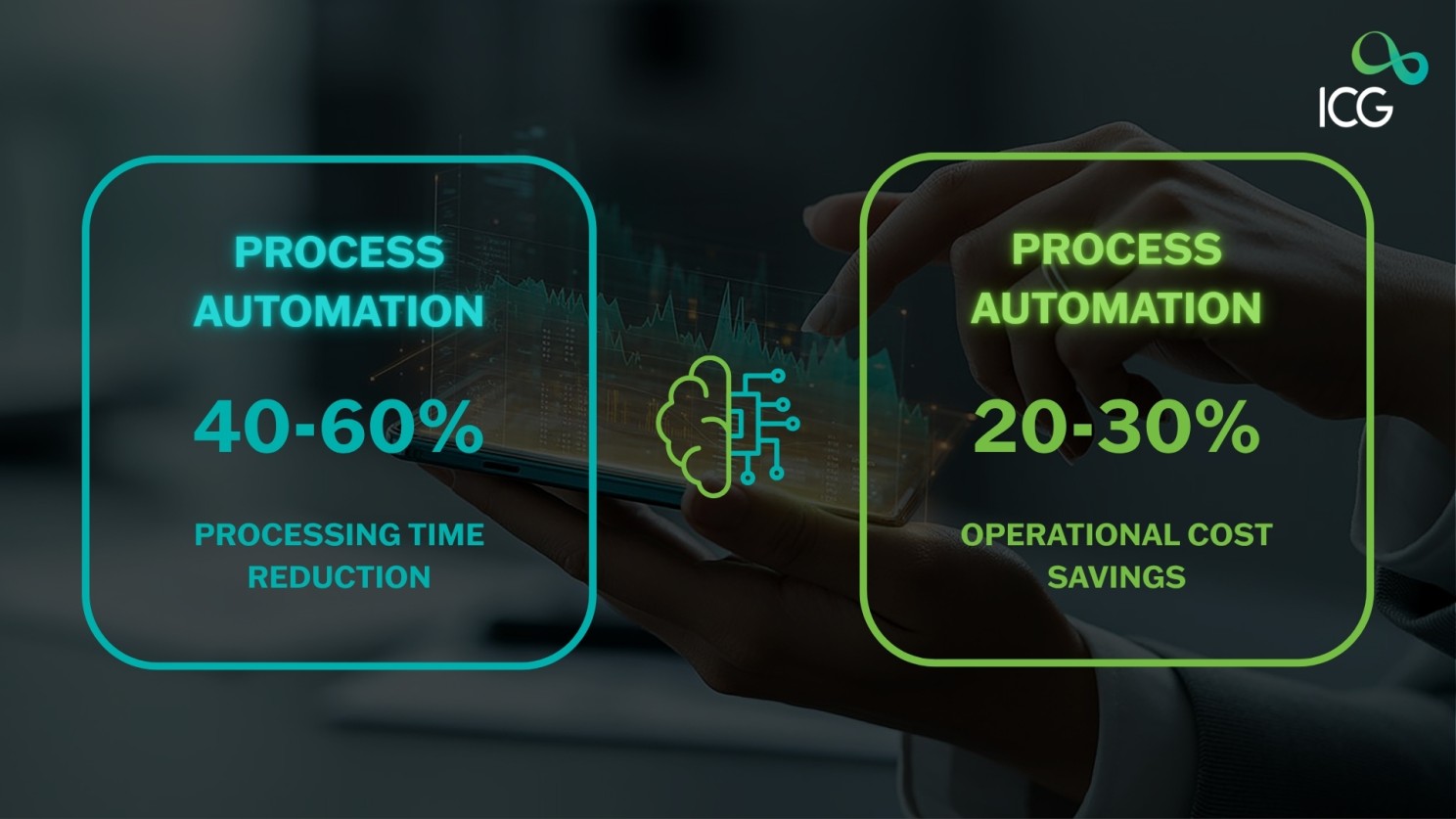
These are not incremental improvements. They represent a strategic leap toward digital-native, scalable operations. SaS doesn’t just improve service—it redefines it.
Looking Ahead
The impact of SaS extends well beyond operational gains. By turning services into intelligent software systems, organizations unlock real-time visibility, stronger governance, and embedded decision logic. These systems can proactively detect issues, reroute processes, and adapt in real time—minimizing bottlenecks and delays without requiring human intervention.
However, the path to SaS maturity is not without its challenges. Many businesses underestimate the effort required to re-engineer legacy workflows, integrate data systems, and prepare teams for a software-first environment. Others struggle to fully leverage the data flowing through their systems, missing out on the intelligence that drives continuous optimization.
True success with SaS depends on more than tools. It requires clear objectives, disciplined execution, and a culture ready to operate in a digital-first way. Without those foundations, even the most powerful platforms can underdeliver.
The ICG Approach
At ICG, we offer a customized approach that empowers your teams with the latest insights and technology expertise to navigate the demands of today’s digital age. As Saudi Arabia embarks on its digital transformation journey, ICG plays a pivotal role in shaping the Kingdom’s tech landscape by providing cutting-edge solutions, strategic consultancy, and fostering innovation. Our comprehensive guidance, from fundamental concepts to practical implementation, helps organizations mitigate risks, stay ahead of the competition, and unlock their full potential in the accelerating digital environment.
Ready to talk?
Request your free Consultation to learn more about ICG’s capabilities and enablement to embark on a transformative expedition toward the summit of success.